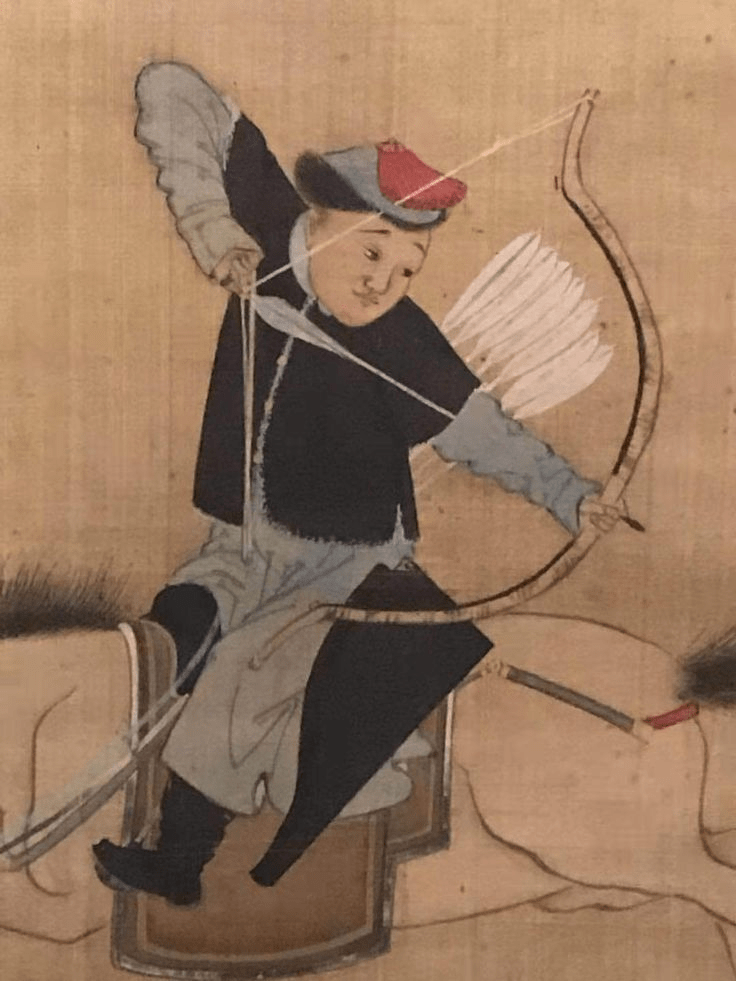
This article is based on my notes and partial translation of sections in Gu Hao’s text called Theory of Archery. You can find them under articles on Gu Hao’s:Techniques – International Manchu Archery Association 国际清弓协会 Gurutengge Manju Gabtan i Isanun
These notes and translations allowed archers to read Gu Hao’s commentaries alongside watching Mr. Li Qingyang’s video lessons, but whether my interpretation of Gu Hao’s notes fully agree with Mr. Li’s approach is for the readers to decide.
The topics presented here are pertaining to stance and bow grip, which correspond to the following Lesson 1 and Lesson 2 from Mr. Li.
Bu-Wei (the Stance, synonym of Zhan-Wei)
Gu Hao’s Bu-Wei (步位 the Stance) presented a different perspective to Zhan-wei (站位,a synonym of Bu-Wei under this current context) as introduced in Lesson 1. Gu also reinstated the importance of the Ten Key Words of Wai Gong, which was introduced in an earlier post.
Gu Hao’s Bu-Wei (步位 the Stance) presented a different perspective to Zhan-wei (站位,a synonym of Bu-Wei under this current context) as introduced in Lesson 1. Gu also reinstated the importance of the Ten Key Words of Wai Gong.
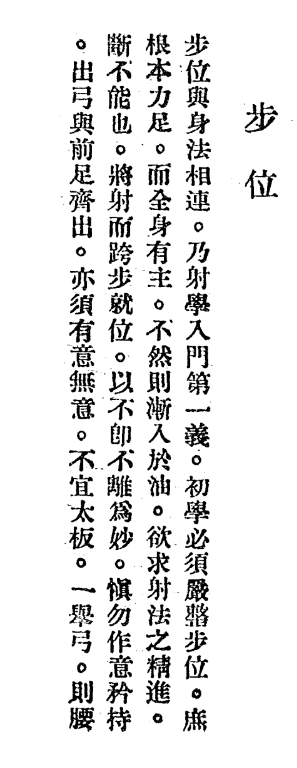
Translation of Gu’s commentary is quoted below.
“Your stance is connected to the posture, which is the fundamental principle of archery. Beginners must strictly adjust the stance. The body can be “controlled” only with the foundation of a strong root. Otherwise, you will develop a (bad) habit and progress in shooting becomes unattainable.
When you are about to shoot and stepping into the stance, it is most wonderful to be in a state of neither grasping nor rejecting “the form” (i.e., to be in a natural state while agreeing with a good standard form). Do not intentionally impose it.
(1.) The bow is held aligned with the front foot, and it should be performed neither intentionally nor unintentionally. Your action should not be rigid.
(2.) When the bow is lifted, the hip is settled back (i.e., balance is shifted slightly to the right (back foot)). The rib cage is lean into the front and the hip turns.
(3.) Keep your face directed toward the target, and your chest and face will be aligned naturally.
Your fundamentals will be firm, and all other good qualities (i.e., the qualities expressed by the Ten Key Words of Wai Gong) will naturally follow. Yet, it is a taboo to be not following the proper sequence. The principle is to engage your whole body starting with drawing the bow and completing all of the Ten Key Words (in sequence). If the sequence is wrong although all Ten Key Words are complete, it is still bad practice and very harmful once became a habit.”
When I was reading the above commentary on Bu-Wei, I naturally associated it with Mr. Li’s lesson on Zhan-Wei. Gu did not provide the specifics on how to properly “step into” the stance but merely described the ideal state of one’s body and mind when performing the stance. The detail posture and foot placements are something that Mr. Li’s video can fill in.
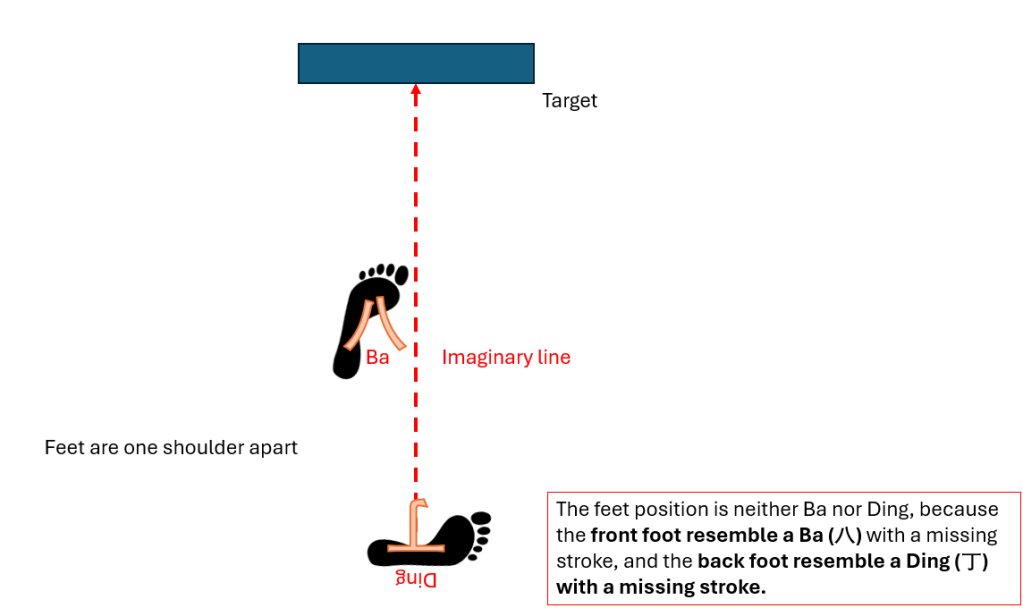
The third point that Gu has brought up and the sequence of performing all Ten Key Words involve the full draw cycle. Hence, they are beyond both the scope of Lesson 1 and this article. They will be discussed in future Lessons from Mr. Li and future discussions related to drawing the bow following Gu’s Ten Keywords.
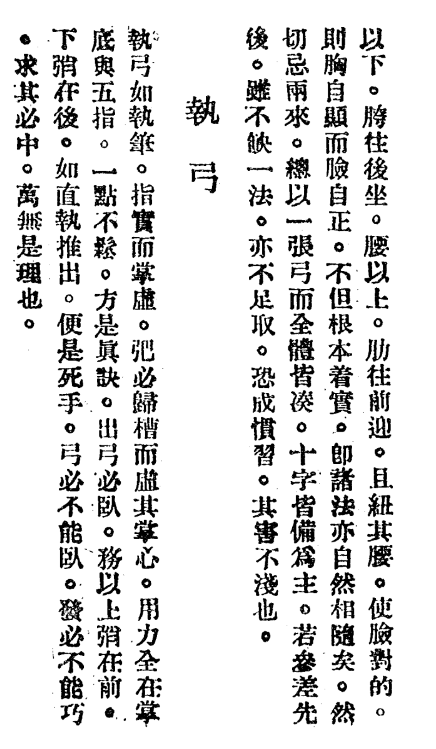
Below is an excerpt of the Qing’s military manual and a photo of a Qing archer to demonstrate chest and face alignment.
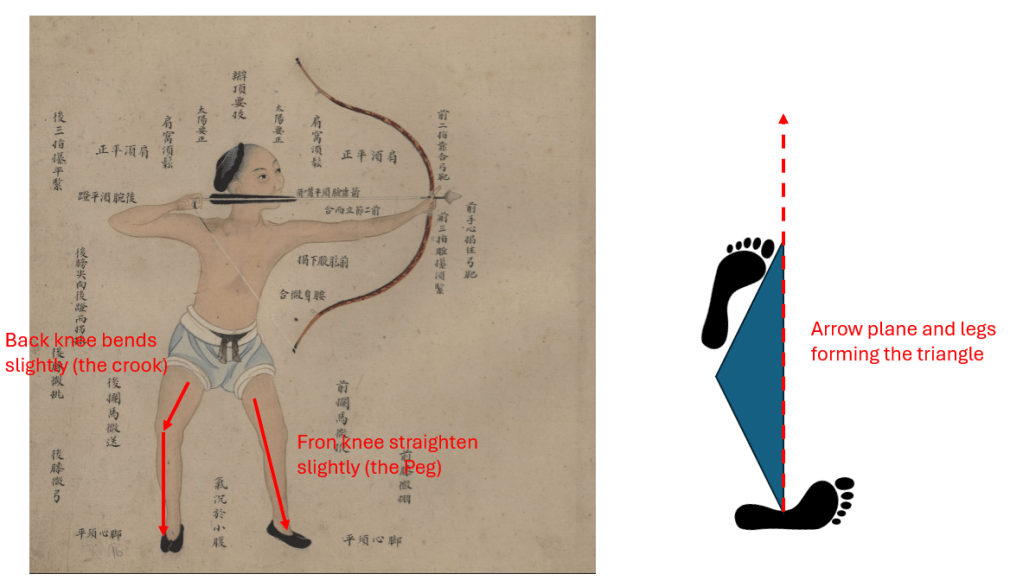
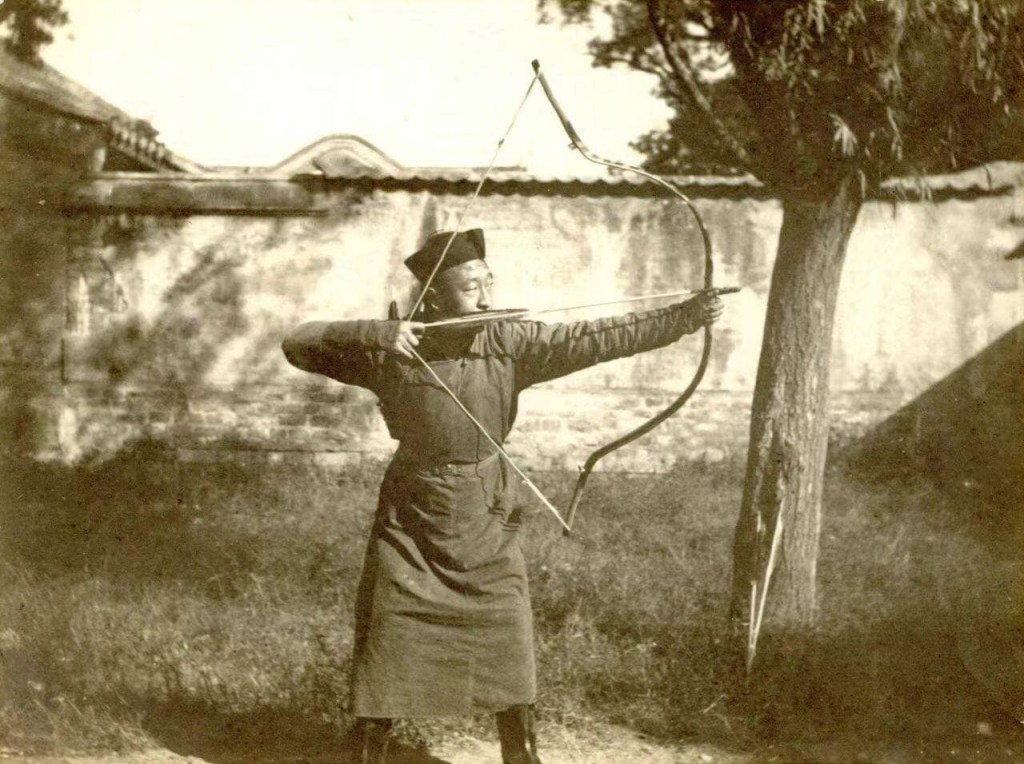
Zhi Gong (执弓 Holding the bow)
The contents presented in this section are related to Lesson 2 – Diao Zuan (coming soon). In fact, I found Gu’s approach to be identical to the Diao Zuan technique introduced by Mr. Li for bow griping. Below is the translation of Gu’s commentary.
“Holding the bow is like holding a Chinese brush. The fingers are firm and leaving (a subtle) space in the hand. The bow must return to its position, and the hand is hollowed (subtly). Applications of force are from the Zhang-Di (palm, meaty part of the hand) and the five fingers. My advice is to NOT leave anything loose. When pushing the bow forward, it must lean with the top siyah forward and the bottom siyah coming back toward you( i.e., to tilt the bow refer to Wo in the Ten Key Words). If it is held straight, we can tell it is a “dead hand” (a stiff and poorly performed grip). The bow will not lean, and your shot must be clumsy. It would be impossible for you to hit the target.”
Shown below are pictures of how the Chinese brush is held and a bow grip demonstrated by Mr. Li in a Lesson 2’s illustration.
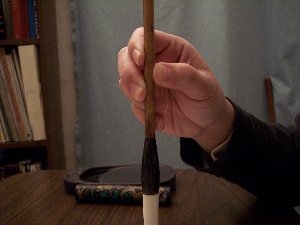
The similarity between brus hand bow grips is easily understood by most archers.
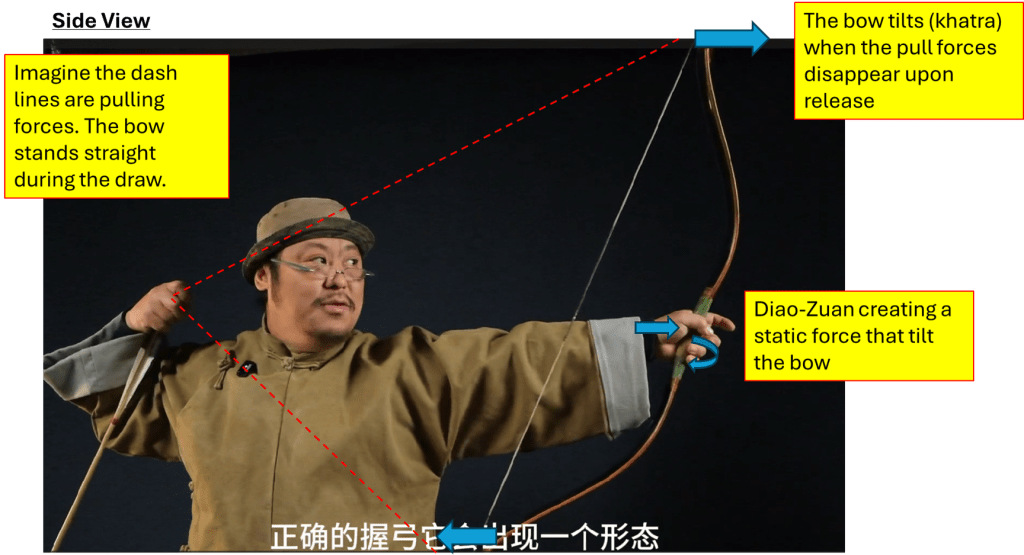
The reasons why I believe Gu and Mr. Li are advocating the same same concept because of the followings:
Gu: “The bow must return to its position”
Li insists on the bow tilting forward as the natural position of the bow when it is gripped properly with Diao-Zuan.
Gu: “Applications of force are from the Zhang-Di (palm, meaty part of the hand) and the five fingers. My advice is to NOT leave anything loose.”
Li stated that the grip is a firm grip using the coiling force of the pinky, slight less strength from the ring finger, a even lighter middle finger, a weaker index finger pointing out, and a thumb that prop against the bow grip. All five fingers work together to create an area that Li calls Zhang-Xin to push against the bow grip.
Gu: “When pushing the bow forward, it must lean with the top siyah forward and the bottom siyah coming back toward you”
You can refer to Li’s demonstration above and the Qing illustration.
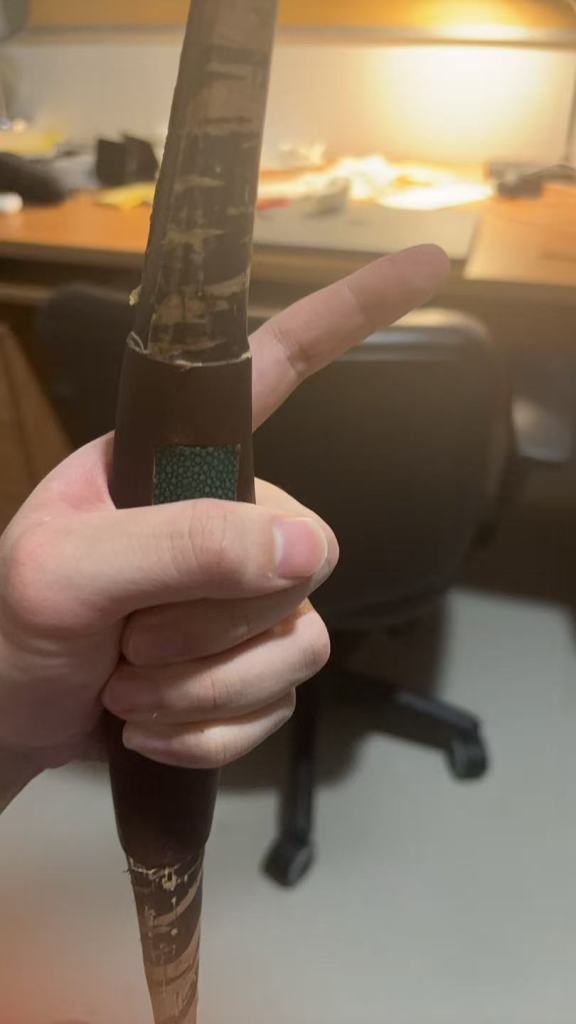
Gu: “If it is hold straight, we can tell it is a “dead hand” (a stiff and poorly performed grip). The bow will not lean, and your shot must be clumsy.”
In Li’s video he discourage poor griping. Below is a typical example.
Original Text:
 International Manchu Archery Association 国际清弓协会 Gurutengge Manju Gabtan i Isanun
Leave a comment