Bow Draw Weights
There are no doubts that the Alibow’s Yarha series are some of the most popular Manchu bows in the market. They produce bows from 30# to 150#. The unit “#” refers to pound which is equivalent to 0.45 kg in S.I. unit. (We are not paid by Alibow, it just happened to be a popular product.)
Standard Size Yarha III “Tondo Jafaku” Imperial Manchu Bow V1.1 | alibow
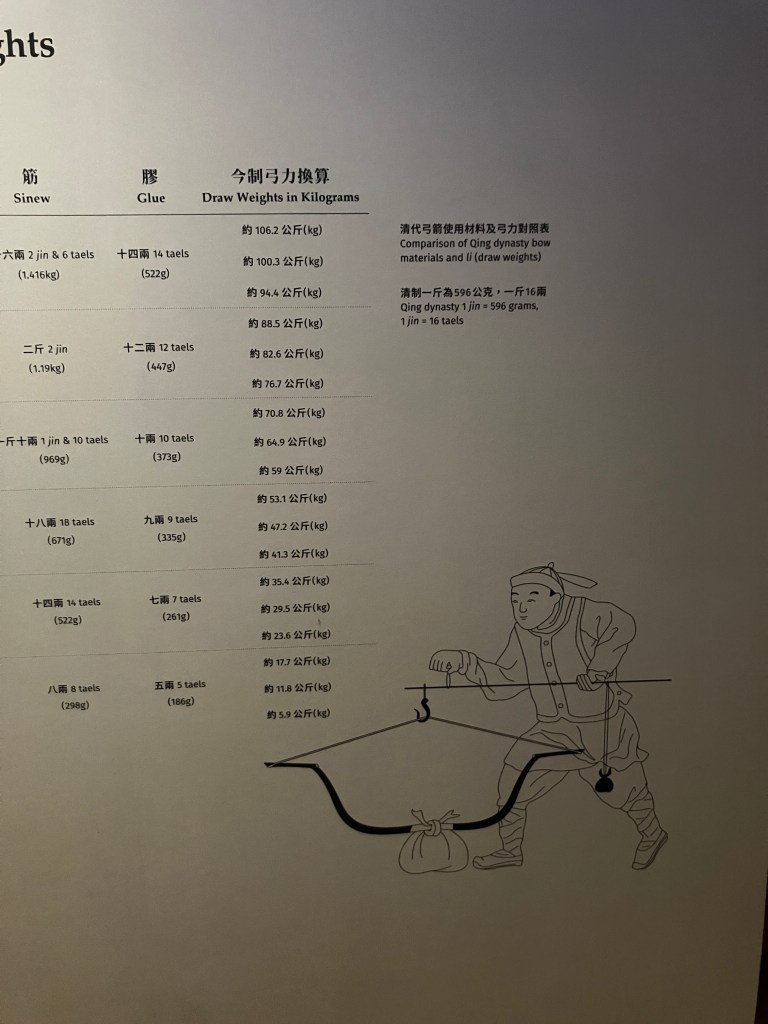
During the Qing Dynasty, the unit for bow draw weight is Li (力 lit. Strength).One Li is equivalent to 5.86 kg, and One Li is equivalent to ten Jin (斤).
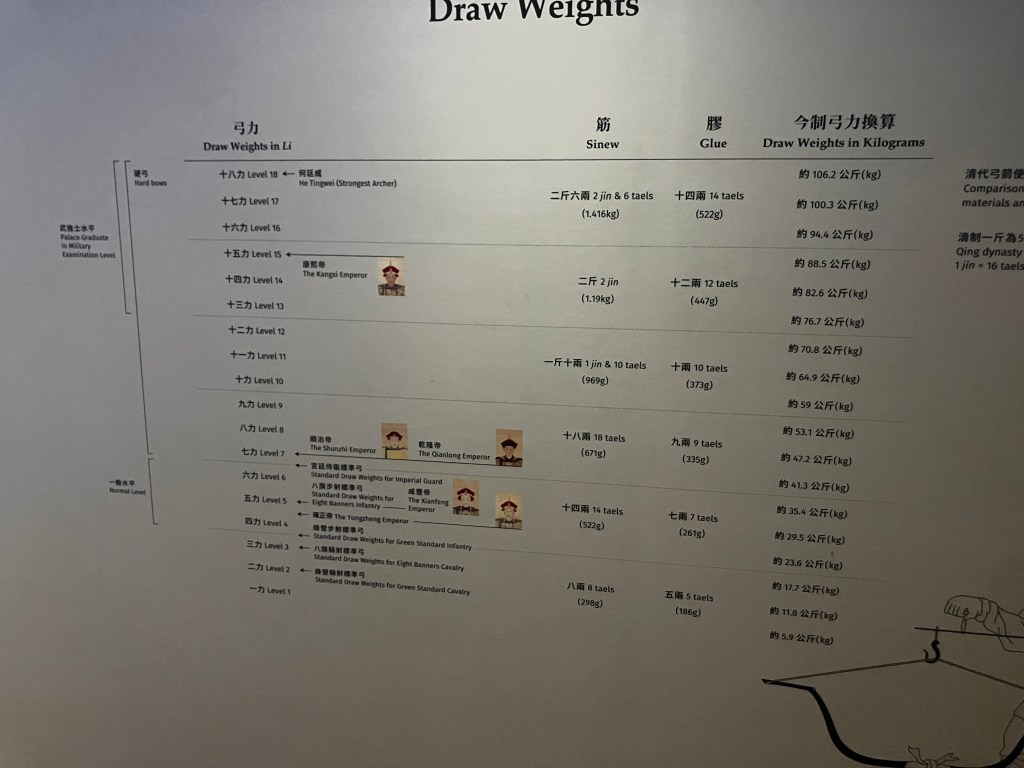
Based on my reading of the Imperial Military Examinations in the QIng Dynasty by Li Lin, Partique des Examens Militares en Chine by Etienne Zi, and the gallery of the Hong Kong Palace Museum, I have developed the follow chart to help archers to select their bow’s draw weight based on historical references. However, I did not perform rigiours research on sufficient sources to claim that the information is authoritative. Feel free to disagree and use at your own discretion.
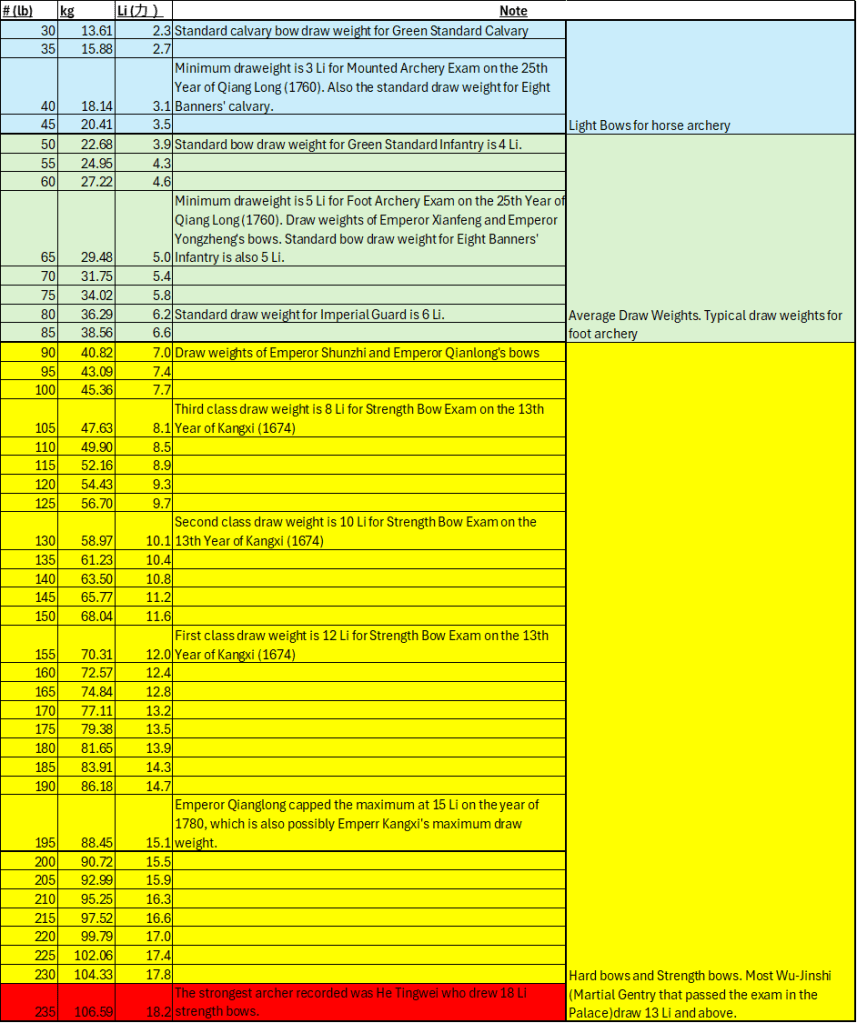
It seems that there were three categories of draw weights (at least from the time of Emperor Qianlong): one for mounted archery, one for foot archery, and one for strength training or demonstration.
It is clear that the reputation of ultra heavy Manchu bow came mainly from the strength bow categories. An archer would shoot from 40% to 65% of his or her maximum strength bow draw weight.
Mounted Archery uses bow draw weight from 30# to 40# ( 2 Li to 3 Li) with 40# (3 Li) being the minimum for the mounted archery criteria for military exam.
Foot Archery uses draw weights from 50# to 85# (4 Li to 6.5 Li) with 5 Li being the minimum for the foot archery criteria for military exam.
Strength bow drawing is not for shooting but for training or strength demonstration, typically 90# and above.
Arrow Weights
Modern Manchu bow archers would usually select arrow weights using the unit gpp (grains per pound). The rule of thumb is 12 gpp, 15 gpp, and 20 gpp, and arrow length is selected based on one’s draw length. The following table is created using this general rule.
For Manchu bows made from modern materials, please DO NOT shoot less 12 gpp.

However, when looking at the available historical sources, something interesting was found. The arrows for military exam’s mounted archery and foot archery were standardized and provided to the examnee.
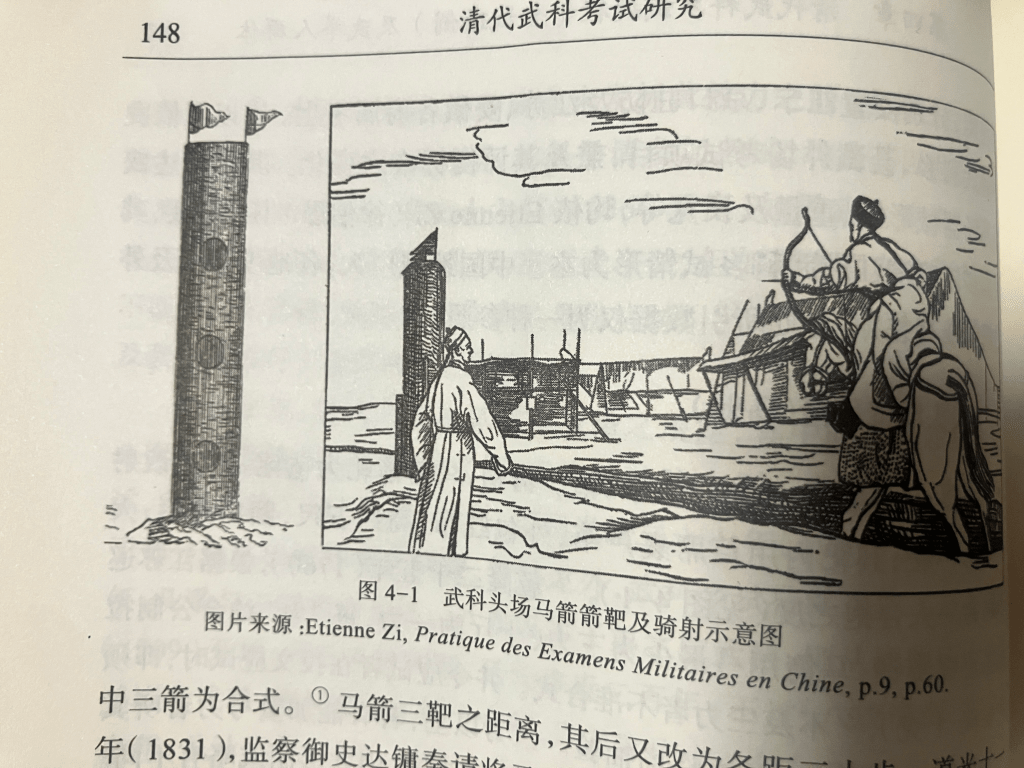
Mounted archery arrows are:
Shaft Length – 0.98 m
Shaft Circumference – 0.04m
Weight – 80 gram
The bow used in mounted archery had minimum draw weight of 3 Li (40#), but examinees are allowed to use a draw weight of his choosing.
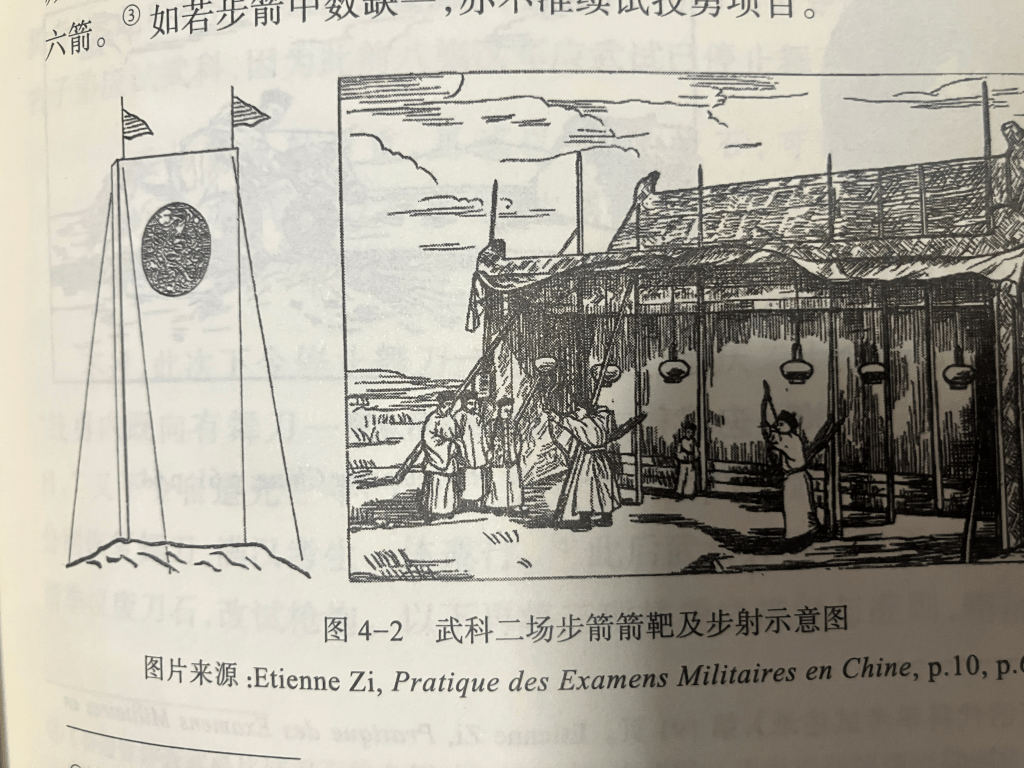
Foot Archery arrows are:
Shaft length – 0.92 m
Shaft circumference – 0.032m
Weight – 35 gram
The bow used in foot archery had minimum draw weight of 5 Li (65#), but examinees are allowed to use a draw weight of his choosing.
These were recorded by Li Lin and referenced to Etienne Zi. It is uncertain how representative the information was and whether Zi examined multiple arrows during the exam that he witnessed.
Based on this interesting information, it seems that the gpp they used could be as extreme as: 38.9 gpp and 8.3 gpp respectively for mounted archery and foot archery. It is surprising to see that mounted archery uses much heavier arrows and foot archery uses very light arrows per today’s common practice.
The heavy arrow weights might be due to the close distance of the mounted archery to the mounted archers. Also, the light arrow weights might be due to the needs for hitting far targets during the foot archery exam between 30 Bu (46.1m) to 80 Bu (123 m) depending on the period of the dynasty,
Based on the extreme gpp recorded, one could have a taste of their shooting experience according to the followings (assuming you have a horn bow):

But be warned that, I have doubt it will be pleasant to shoot following these extreme gpp.
DO NOT ATTEMPT THE ABOVE EXTREMELY LOW GPP IF YOU DO NOT HAVE A HORN BOW. Even with horn bow, it might not be the best for your bow lifespan using the extremely low GPP.
 International Manchu Archery Association 国际清弓协会 Gurutengge Manju Gabtan i Isanun
Leave a comment